

A practical guide for US citizens buying off-plan or new-build homes in Spain: NIE, banking, Power of Attorney, contracts and notary completion.
You can start (and often complete) the purchase of a new home in Spain from the US without flying over for every step. The trick is to get the “admin rails” in place early: NIE, banking, and (if you want a fully remote process) a properly drafted Power of Attorney, then let the legal and contract stages run on a timetable you can actually control.
A good Spanish agency can coordinate viewings, floorplans, spec sheets and developer communication remotely, but the point of this article isn’t to sell you on that. It’s to make the process clear, predictable, and low-drama, especially for buyers looking at Costa Blanca developments and off-plan apartments.
This guide covers the practical steps for a US citizen buying a new build home in Spain remotely from NIE and a Spanish bank account, to Power of Attorney, contracts, staged payments, and the notary completion so that when you do speak to an agent, lawyer or bank, you already know what.

Step 1: Get your NIE from the US (so you can buy remotely)
NIE is your foreigner ID number in Spain. If you’re buying remotely, you don’t need to “wait until you’re in Spain” — you can apply from your country of residence through a Spanish consulate.
In most consulate processes you’ll see:
- EX-15 form (Application for Foreigner’s Identification Number), and
- Modelo 790-012 fee form (plus passport copies and supporting documents).
Timing reality: consulate timelines and appointment availability vary, and can be weeks rather than days, so treat NIE as a first-week task, not a last-minute admin detail.
Practical tip: if you’re serious about a specific development, start your NIE application before you pay a reservation deposit. It removes friction later, especially for banking and completion.
NIE for US buyers: where it’s handled
US citizens do not need to travel to Spain to apply for a Spanish NIE.
Applications are normally handled through Spanish consulates in the United States.
Most commonly used consulates include:
New York · Miami · Los Angeles · San Francisco · Chicago · Houston · Boston · Washington, D.C.
A current and official list of consulates is published on the Embassy of Spain in the United States website.
Step 2: Opening a Spanish bank account as a non-resident (or agree a clean payment route)
You can pay from the US, but many buyers open a Spanish non-resident bank account because it keeps the process tidy: reservation deposits are simpler, stage payments are easier to track, and after completion you can pay community fees and utilities without constant back-and-forth.
What to expect is fairly standard. Banks vary, but non-resident accounts usually come with two realities: identity checks and compliance questions. That doesn’t mean anything is “wrong”, it’s just the normal anti–money laundering process, and it can take longer than people assume.
Typical documents banks may ask for (varies by bank):
Don’t leave banking until the last month before completion. Set it up early, so you’re not trying to open an account and move funds at the same time.
And whichever route you choose — Spanish account or US transfers — keep a clear paper trail for every payment (bank references, receipts, and confirmations). That’s what makes remote buying feel straightforward rather than stressful.
Step 3: Use a Power of Attorney to make the purchase genuinely “remote”
If you don’t want to fly to Spain for every signature, a Power of Attorney (PoA / poder notarial) is what makes a remote purchase workable. It allows a Spanish lawyer (or another trusted representative) to sign documents and handle key steps on your behalf including contract signing and, in many cases, the notary completion.
For US buyers, the important thing is that a PoA signed outside Spain usually needs to be prepared in a way Spanish institutions will recognise. That typically means it’s notarised, then legalised (often via a Hague Apostille), and sometimes translated by a sworn translator depending on how and where it’s used.
What a PoA can usually cover (keep it specific):
What to do in practice:
Done properly, PoA doesn’t make the purchase “risky”, it makes it structured. The goal is simply that you’re not forced into last-minute travel because one signature can’t be done remotely.
Remote buying: what usually slows people down
Most delays aren’t about the build.
They’re about admin: NIE timing, bank compliance checks, and paperwork that arrives late.
If you start those early, the rest of the timeline becomes far more predictable.
Step 4: Choose the project – Then run the legal check before you commit
With new-build and off-plan property in Spain, the sensible approach is to treat the visuals as a starting point and the paperwork as the decision-maker.
From the US, you’re often choosing based on floorplans, specs, and developer updates rather than frequent site visits, so the legal check is what keeps the purchase grounded in what’s actually being sold and built.
At Spaces & Places Exclusive Property S.L., a Valencia-based real estate agency specialising in new-build homes, we typically help buyers organise the information properly: we gather the developer documents for the chosen unit, clarify what’s included in writing (parking, storage, upgrades), and coordinate the questions that your independent lawyer will then verify. The goal is simple: fewer assumptions, fewer surprises.
What your lawyer should typically review (and what you should request copies of):
A useful rule of thumb: if something matters to you — sea view line, parking space, terrace size, fixtures — it needs to appear in the written pack, not just in a brochure or a video call.

Step 5: Reservation Contract (Contrato de Reserva)
This is usually the first moment you’re asked to pay money, so it’s also the first moment you find out how organised the transaction really is. A reservation contract is normal for new build home in Spain but you want it to do one simple job: tie your payment to a specific unit on clear terms, with no vague “we’ll confirm later” gaps.
Before you send a reservation deposit, ask for these points in writing (email is fine):
If something matters and it isn’t written down, treat it as a proposal, not a promise.
Step 6: Stage payments during construction (how you keep them safe)
With off-plan apartments, staged payments are standard — you’re funding the build in instalments rather than paying everything on completion day. The question isn’t “are stage payments normal?” The question is “what protects your money while the home is still being built?”
Spain has a framework requiring amounts paid in advance for homes under construction to be protected, commonly through a bank guarantee or an insurance-backed structure (with the modern rules in place since 2016). The detail that matters for buyers is practical: your payments should be traceable, contract-linked, and protected in the way your lawyer can confirm in writing.
What to do as a buyer
Treat each instalment like a formal transaction, not an informal transfer. Ask your lawyer to confirm:
If those two answers are clear, stage payments stop feeling risky, they become a controlled part of buying new property in Spain from a distance.
Stage payments: the safe way to treat them
Every instalment should be tied to the contract, sent to the correct beneficiary, and backed by the correct protection mechanism (your lawyer confirms this). If a payment can’t be clearly evidenced, don’t rush it.
Step 7: PPC (Private Purchase Contract): Where the deal really becomes fixed
After reservation, you typically sign the PPC. This is where:
Remote buyers often sign the PPC via PoA once the legal review is complete.
Step 8: Notary completion (the final signing)
Completion happens when the title deed (escritura) is signed at the notary and the purchase funds are released. If you’re not there, your representative signs via PoA.
Before completion, you’ll want:
A simple remote-buying checklist (US buyers)

In practice, remote buying works when you treat it like a documented process: get your NIE started, set up a clean payment route, use PoA if you want to avoid travel, and keep every key term in writing. From there, the steps are straightforward and the FAQ below covers the questions US buyers most often ask.
FAQ
Quick answers for foreign buyers:
About the author
SPACES & PLACES Exclusive Property S.L.
Information in this article is intended for general guidance only. Development details, pricing and availability may change; please verify all information directly with the developer or your trusted adviser before making any purchase decisions.

New Development in Denia, Spain
Talasa Caelus brings sustainable seaside living near Dénia: elegant new-build homes with spacious terraces, landscaped gardens and pools, blending design, comfort and energy efficiency.
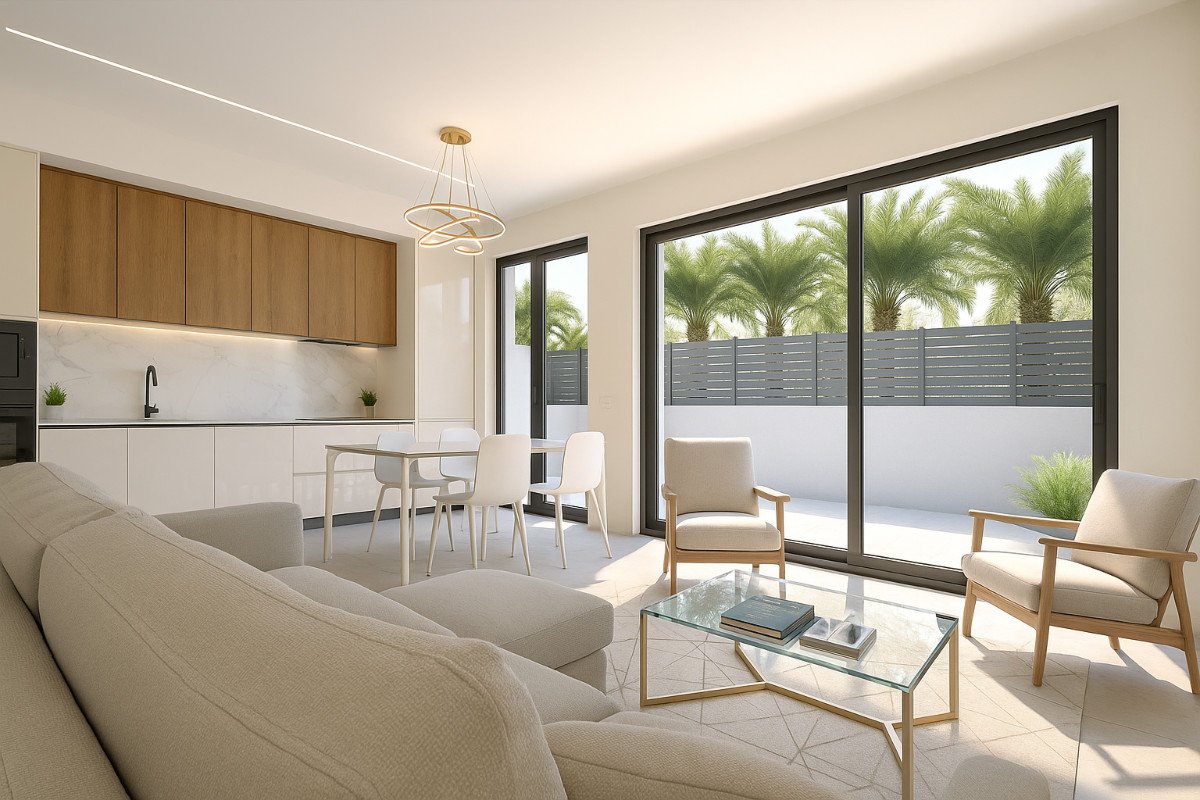
Key-Ready Townhouse in Valencia Suburbs
Modern turnkey home with private garden, terrace and high-quality finishes; featuring bright interiors, energy-efficient design and ready for immediate move-in.

New Development Penthouse in Valencia
Exclusive new-build penthouses in Cabanyal, Valencia. 3 bedrooms, terraces and eco-friendly design close to the sea and city centre.