

How to Buy A New-Build or Off-Plan Home in Spain
Buying a new-build property in Spain can be straightforward, but only if you understand who is being paid, what is included in the price, and which parts of the process you can safely delegate.
At NewProperties.Space (a project by real-estate agency Spaces & Places Exclusive Property S.L. in Valencia, Spain) we specialise in Costa Blanca and Valencia-area developments. Some of the work we do is embedded in our agency role: checking documents supplied by the developer, asking awkward questions about timelines and guarantees, and flagging issues early. Other services – for example, mortgage support or very hands-on completion management – are optional, paid add-ons that not every buyer will need.
This guide is meant to help you understand the structure of a typical new-build purchase in 2026, so that when you do speak to an agent, lawyer or bank, you already know what to ask.
1. How Your Agent is Paid And Why It Matters
In most new-build and off-plan projects in Spain, the developer pays the selling commission. That’s normal and, when handled transparently, it shouldn’t make the home more expensive for you.
Problems start when:
- commissions are unusually high and quietly loaded into the price, or
- several intermediaries are taking a slice and nobody is very clear about who they are.
Some international agencies still promote “free” buyer services while working on 5% + VAT commissions or sharing fee.
A good sense-check:
- Ask the agent who pays them on this specific property.
- Ask whether there are any fees payable by you as buyer (admin fees, “consultancy” retainers, etc.).
- Ask for the answer in writing before you travel or reserve.

At Spaces & Places we are usually paid by the developer on new-build sales. If any separate fee were ever to apply to you as a buyer – for example, for an additional tailored service beyond standard agency work – we would set that out clearly in advance so you can decide whether it’s worthwhile.
2. Viewings That Actually Help You Decide
For many overseas buyers, the first contact with a development is a glossy brochure and a video call. There’s nothing wrong with that, but the viewing – whether in person or virtual – should do more than show you a swimming pool.
A viewing that genuinely helps you decide will cover:
- exact location within the town or resort (noise, access, year-round services)
- orientation and views of the specific unit, not just the “best angle” of the show flat
- what is included in the price: parking, storage, white goods, AC, furniture packs, etc.
- honest context about other projects nearby – not just that one development in isolation.
For overseas clients we often start with a structured video tour using live video from the site, then follow up with a concise pack: floor plan, orientation, current construction photos, estimated service charges and payment schedule. That way, when you do fly in, you already have a shortlist instead of a random set of visits.
3. Lawyers, Paperwork and Who Does What
An independent lawyer is not a luxury; it is the backbone of a safe purchase, especially off-plan.
Your conveyancer (not the developer’s in-house lawyer) should:
- confirm that the land and building licence are in order
- review the Private Purchase Contract (PPC) – price, payment schedule, delivery date, penalties
- check that all pre-completion payments are covered by a legally valid bank guarantee or insurance
- prepare Powers of Attorney (POA) if you want them to act on your behalf.
Alongside that legal work, a specialised agency can take care of more practical checks on the developer’s pack – for example:
- comparing the brochure, plans and technical specification to what is in the contract
- asking for updated build photos and reports rather than relying on outdated marketing material
- clarifying small but important details: height of fencing, position of heat pumps, storage, community rules.
Our role is not to replace the lawyer but to sit between you, the developer and your legal team so that issues are detected early, in plain language, before they become disputes.
Power of Attorney: why many overseas buyers use it
If you live outside Spain, a POA can allow your lawyer to open a bank account, sign certain documents and attend completion or snagging visits on your behalf.
Typical costs are in the low hundreds of euros (notary + drafting). You still keep control: you decide what the lawyer is authorised to sign and you can revoke the POA later if you wish.
4. Moving Money Into Euros Without Surprises
Most buyers will need to transfer significant funds into Spain, often in several stages: reservation, PPC, staged payments and completion.
You can use your own bank, but it’s worth comparing:
- transfer fees and exchange rates
- whether they charge extra for issuing a bank draft or banker’s cheque for the notary
- how quickly funds can be moved if completion dates shift.

Specialist FX companies, properly authorised in the EU or UK, can sometimes offer better rates and help you plan transfers over time rather than all at once. This isn’t investment advice; it is simply a reminder that a one-or-two-point difference on a large sum is real money.
5. The True Cost of Buying a New-Build in Spain
The headlines are simple; the detail is regional.
For new-build property in Spain you should plan for:
- Purchase taxes:
- IVA (VAT) on the property price – typically 10% on residential new-builds in most regions.
- AJD (stamp duty) on the declared price – in the Valencian Community, the general rate is currently 1.5%, with possible reductions for qualifying buyers (main home, under 35, large families, disability, etc.).
- Legal fees: usually a fixed amount up to a certain purchase price, then a percentage above.
- Notary and Land Registry: these follow regulated scales. For orientation, many buyers pay several hundred euros at the registry and around €600–€1,000 at the notary on standard residential purchases.
- Bank costs: if you are taking a mortgage, the bank may cover many of the formal costs under current legislation, though you still pay for the valuation and any arrangement fee.
- Banker’s draft / completion fees: some banks charge separately for issuing a bank draft for the notary. Others offer ways to reduce this cost.
The exact numbers will change over time and by region, so treat any figure you see online as a guide only. Your lawyer should give you a tailored cost estimate before you sign anything.
6. Buying Off-Plan: The Protections That Matter
Off-plan property can work very well if you concentrate on structure rather than sales talk. Before reserving, ask your team to confirm:
- that the building licence has been granted (no permit, no start),
- that all pre-completion payments are covered by a valid bank guarantee or insurance policy in your name,
- the contractual delivery date and what happens if the developer is late,
- the steps to obtain the Licence of First Occupation (LPO) and how this links to handing over keys and utilities.
As an agency we request and file these documents as standard, but it is your lawyer who will formally confirm their validity and draw your attention to any legal risk.
7. Square Metres: Making Sense of the Numbers
Spanish property brochures can be confusing if you are used to UK or US listings. You may see three different areas for the same apartment:
- Usable area (útil): the space you physically live in – interior rooms and sometimes terraces.
- Built area (construida): includes wall thickness; often 15–25% more than usable.
- Built including communal areas: adds your notional share of corridors, lobbies, lifts and so on.
Before comparing prices between developments, make sure you are comparing the same kind of square metre. A “90 m² apartment” can feel very different depending on which figure is being quoted.
We routinely ask developers to break down these numbers in writing so clients can compare like with like.
8. Mortgages and Timelines for New-Builds in Spain
If you need finance, mortgage pre-approval will shape your budget and buying calendar.
Key points:
- Pre-approval first: this gives you a realistic price range and speeds up the contract stage.
- Valuation and underwriting take time: factor several weeks into your planning, especially if you are self-employed or have non-standard income.
- Developer’s global loan: some projects have a pre-arranged financing line with a partner bank. You may be able to “subrogate” (take over a slice of that loan) or arrange your own mortgage. Comparing both is sensible; each has pros and cons around flexibility, costs and early-repayment conditions.
Our agency offers separate, paid mortgage support for buyers who want help preparing documentation, coordinating banks and aligning completion dates with loan approvals. It’s not mandatory, but for some overseas clients it removes a lot of stress.
9. A Simple Outline of the Process
Every project is different, but most new-build purchases follow this pattern:
- Initial selection and viewings – online and/or in person, shortlisting a realistic set of options.
- Reservation – a small deposit to take the property off the market while your lawyer begins checks.
- Legal and technical review – licences, guarantees, specification, payment schedule.
- Private Purchase Contract (PPC) – main contract stating price, calendar, and penalties.
- Construction phase – staged payments (if any), build updates, occasional site visits.
- Completion at the notary – signing the deed, paying remaining balance, registering the property.
- Post-completion – utilities, community set-up, snagging and follow-up with the developer.
An experienced agency sits through all of this, monitoring communication between developer, lawyer and buyer so that issues are picked up early rather than in the notary’s waiting room.
FAQ
Quick answers for foreign buyers:
About the author

SPACES & PLACES Exclusive Property S.L.
Information in this article is intended for general guidance only. Development details, pricing and availability may change; please verify all information directly with the developer or your trusted adviser before making any purchase decisions.
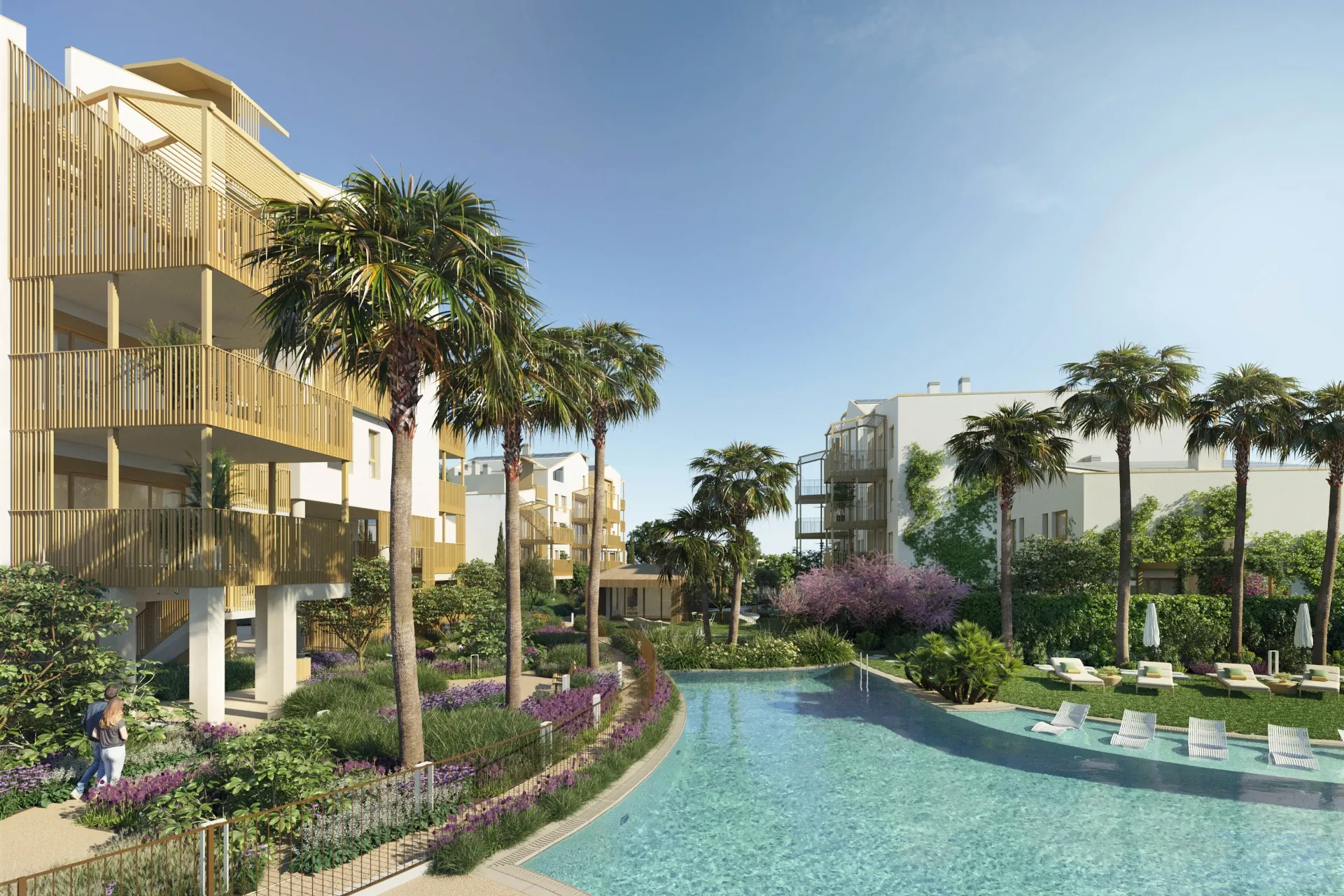
New Development in Denia, Spain
Talasa Caelus brings sustainable seaside living near Dénia: elegant new-build homes with spacious terraces, landscaped gardens and pools, blending design, comfort and energy efficiency.
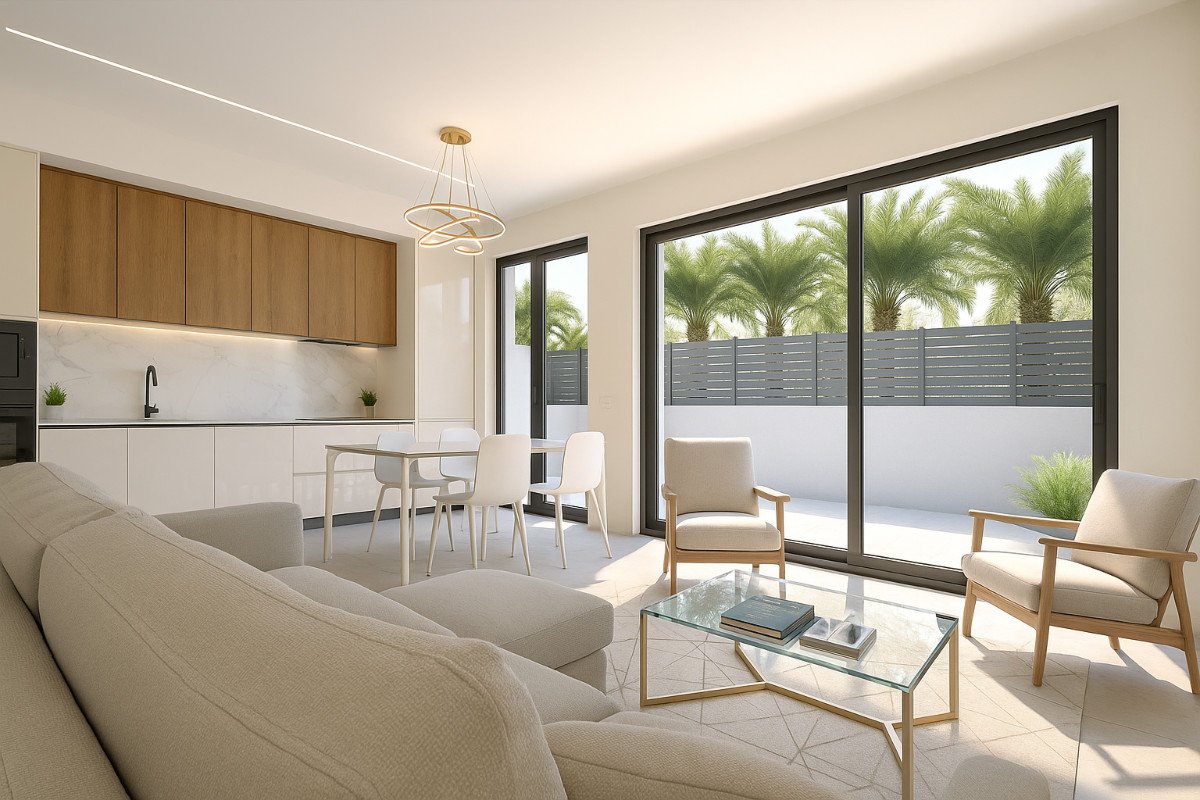
Key-Ready Townhouse in Valencia Suburbs
Modern turnkey home with private garden, terrace and high-quality finishes; featuring bright interiors, energy-efficient design and ready for immediate move-in.
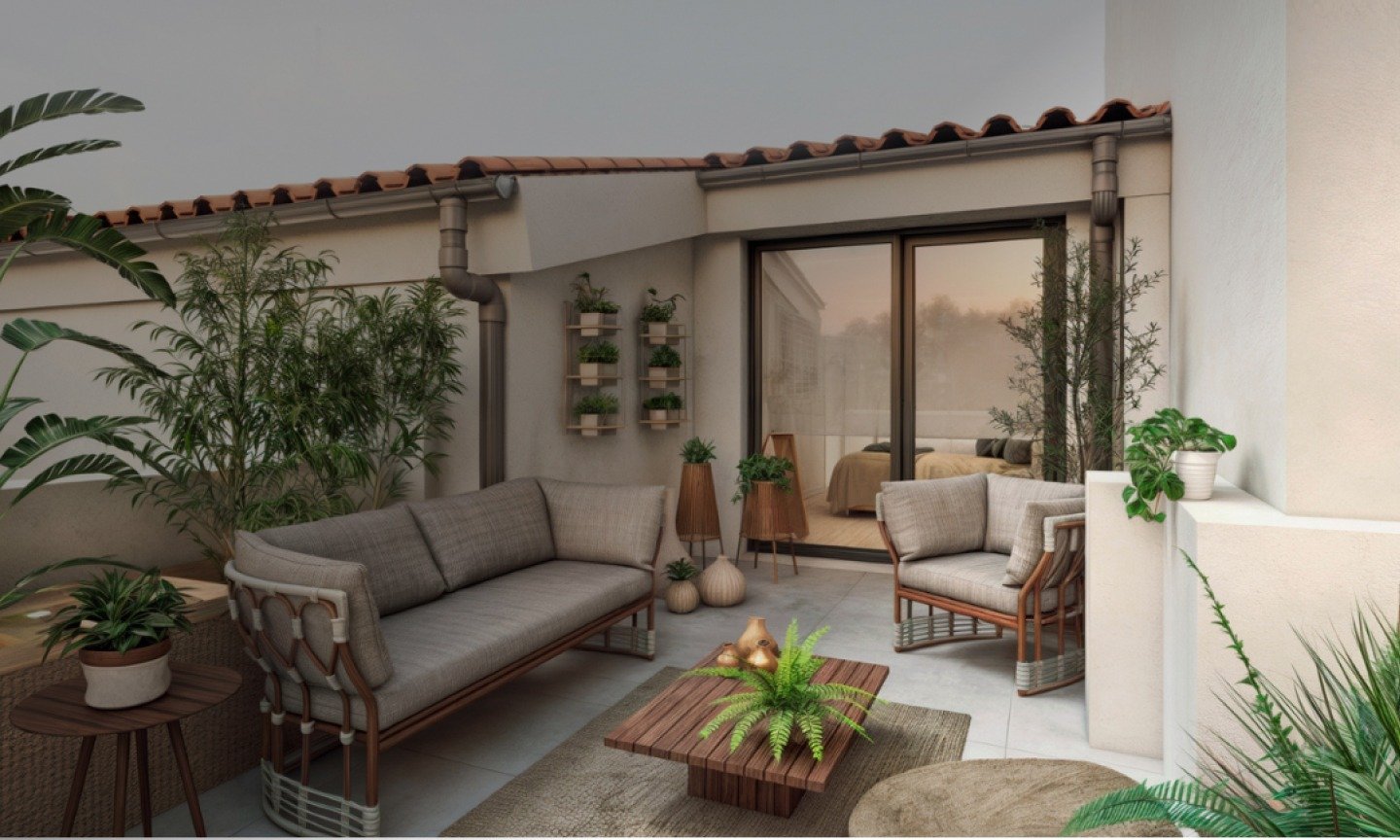
New Development Penthouse in Valencia
Exclusive new-build penthouses in Cabanyal, Valencia. 3 bedrooms, terraces and eco-friendly design close to the sea and city centre.