

Rental yield, realistic returns and key checks before buying a new-build in Costa Blanca
For many international buyers, a new-build property in Spain is not only a lifestyle purchase. It is also a financial question.
Rental yield is one of the first questions international buyers ask when considering a new-build property in Costa Blanca or the wider Valencia region. But it is also one of the easiest figures to misunderstand.
The honest answer is that new-build property can work well as a rental investment, but usually not in the simplistic way many buyers first imagine.
The strongest opportunities are rarely just about the highest headline yield. They are about choosing a property that combines rental demand, resale liquidity, manageable running costs and a location people will still want in 5 or 10 years.
This is especially true across Costa Blanca and the wider Valencia region, where international demand, new housing supply, tourism, local employment and affordability all meet in different ways.
A realistic rental calculation should not be based on a summer Airbnb screenshot or a developer’s optimistic estimate. It should start with market data: achieved or advertised rents, local rental supply, purchase prices, mortgage costs, ownership expenses and the legal route for renting the property.
For this guide, we use professional market data available to real-estate agencies, together with official indicators from Spanish housing and tax sources. The aim is not to promise a fixed return, but to show buyers how rental yield is normally assessed in practice.

Gross yield vs net yield: the first thing to understand
Rental yield is usually shown as a gross annual percentage.
Gross rental yield = annual rental income ÷ purchase price × 100
So, if a property costs €300,000 and rents for €1,200 per month:
Calculation | Amount |
|---|---|
Monthly rent | €1,200 |
Annual rent | €14,400 |
Purchase price | €300,000 |
Gross rental yield | 4.8% |
That figure is useful, but it is not the full story.
Net yield is lower because buyers also need to account for:
For a clean first comparison, gross yield is a good starting point. For a real investment decision, net yield matters more.
What professional market data tells us
Recent professional market data for the Valencia region shows a rental market with strong demand and rising prices in 2026 and upfront.
In Valencia province, rental listings increased by around 26% year-on-year, while asking rents reached new highs. Valencia city remains the strongest urban rental market, but coastal and commuter towns are also relevant for investors because they often offer a lower purchase price and a more flexible buyer profile.
Regional gross rental yield data also gives a useful benchmark. The Comunitat Valenciana and Valencia province were both around 6.1% gross yield in the latest official tax-based rental yield data, while Valencia city was slightly lower at 5.7%.
That difference is important.
The most expensive locations often have strong rental demand, but the purchase price is also higher. This can compress the yield. Cheaper towns may show a higher percentage yield, but may have weaker liquidity, less international demand or fewer high-quality new-build options.
In other words: the highest yield is not always the best investment.
Long-term rental vs short-term rental
Most buyers compare two routes: long-term rental and short-term holiday rental.
They are very different businesses.
Rental model | Best for | Main advantage | Main risk |
|---|---|---|---|
Long-term rental | Stable income | Predictable monthly rent | Lower headline income |
Mid-term rental | Digital nomads, relocation, seasonal workers | Flexible and often less operational than holiday rental | Demand varies by area |
Short-term rental | Tourist locations | Higher possible income in peak season | Regulation, seasonality and management costs |
Long-term rental is usually the cleaner option for buyers who want stability. It is easier to forecast, easier to manage and usually less dependent on weekly tourism demand.
Short-term rental can generate more income in the right location, but it is not passive. It depends on licences, local rules, community statutes, cleaning, guest communication, check-ins, reviews and seasonality.
A property that looks excellent on Airbnb in August may be much quieter in January.
Example rental figures by area
The following examples use market-style rental logic for towns that are often relevant to buyers looking at Valencia, Costa Blanca and nearby coastal areas.
Area | Typical rental profile | Indicative rental logic |
|---|---|---|
Valencia city | Urban, long-term, professional tenants | Strong demand, higher price per m², lower yield due to high purchase prices |
Canet d’En Berenguer | Coastal, near Valencia, seasonal and residential | Good for buyers wanting beach use plus rental potential |
Cullera | Coastal, mixed local and holiday demand | Can work for summer rental, but winter demand must be checked |
Sagunto / Puerto de Sagunto | Commuter, coastal, practical | More year-round than purely holiday-led towns |
Gandia | Larger coastal city, lower entry prices | Often more affordable, but quality and exact micro-location matter |
Jávea / Altea / Calpe | Prime Costa Blanca lifestyle markets | Strong international appeal, but purchase prices can reduce yield |
This is why two properties with the same number of bedrooms can produce very different results.
A two-bedroom apartment close to a beach, with parking, lift, terrace and pool may rent better than a larger but less practical property further inland. For foreign tenants and holiday guests, convenience often matters more than size.
Example gross yield calculations
Below are simplified examples to show how rental yield can change depending on purchase price and rental strategy.
Property example | Purchase price | Long-term rent/month | Annual rent | Gross yield |
|---|---|---|---|---|
2-bed coastal apartment | €280,000 | €1,100 | €13,200 | 4.7% |
Valencia city apartment | €430,000 | €1,650 | €19,800 | 4.6% |
Lower-cost Valencia suburbs or coastal town apartment | €220,000 | €950 | €11,400 | 5.2% |
3-bed apartment near beach | €350,000 | €1,350 | €16,200 | 4.6% |
Premium new-build with sea views | €520,000 | €1,900 | €22,800 | 4.4% |
These are gross examples, not promises. The final result depends on the exact development, delivery date, furniture package, community fees, rental licence situation and the buyer’s financing structure.
Still, the table shows one common pattern: premium new-builds may rent well, but because the purchase price is higher, the percentage yield is not always spectacular.
That does not automatically make them bad investments. It means the buyer should look at the full picture.
Why new-build yields can be lower than resale yields
A resale apartment bought below market value and renovated well may show a higher rental yield than a brand-new apartment.
New-build properties usually cost more per square metre. Buyers are paying for the building quality, energy efficiency, developer warranties, lift, pool, parking, terraces, landscaped areas and lower immediate maintenance risk.
For many international buyers, this trade-off makes sense.
So the right question is not only: “Which property gives the highest yield?”
A new-build may offer:
A better question is:
Which property gives a realistic yield, low operational stress and strong future resale appeal?
Short-term rental: the reality check
Short-term rental can be attractive in Costa Blanca, especially in areas with strong summer demand. But buyers should be careful before building the whole investment case around tourist rental income.
Before reserving a new-build property, check:
This is particularly important in coastal areas where local rules and community attitudes can vary. A property may be excellent for personal use but not suitable for legal tourist rental.
What type of new-build works best for rental income?
From a rental point of view, the safest new-build properties usually have a practical layout and broad appeal.
A good rental-focused unit is often:
For long-term rental, tenants usually care about transport, schools, supermarkets, internet, parking and year-round convenience.
For short-term rental, guests usually care about beach access, outdoor space, air conditioning, views, pool, parking and easy arrival.
The best property is the one that can appeal to more than one type of tenant.
Buyer checklist before calculating ROI
Before treating a new-build as an investment, ask these questions:Property
Property
Rental demand
Regulation
Finance
This checklist is often more useful than a single yield percentage.
So, is new-build property in Costa Blanca a good rental investment?
It can be, but the best cases are usually balanced rather than extreme.
A realistic buyer should not expect every new-build apartment by the sea to pay for itself completely. In many cases, the rental income will offset part of the annual costs and improve the long-term financial picture, rather than create a high-cashflow investment from day one.
The stronger opportunities are usually properties with:
For lifestyle buyers, this can be a very attractive balance. They get personal use, potential income and exposure to a market where good-quality coastal housing remains limited.
For pure investors, the analysis needs to be stricter. A cheaper resale in a less glamorous town may produce a higher percentage yield. A new-build in a prime coastal location may produce a lower yield but offer better comfort, liquidity and long-term appeal.
Market snapshot: why rental yield needs real data
Rental yield should not be calculated from optimistic rental adverts alone. Professional market data for Valencia/València shows that purchase prices, new-build prices and rents all continued to rise into 2026 — but not at the same speed.
Market indicator | Latest figure | Why it matters for buyers |
|---|---|---|
Valencia province property prices | +13.0% year-on-year | Higher purchase prices can reduce headline rental yield, even when rents are rising. |
New-build prices in Valencia province | +13.5% year-on-year | New-builds offer lower maintenance and stronger tenant appeal, but the entry price is usually higher. |
Rental asking prices in Valencia province | +8.5% year-on-year | Rising rents support investor demand, but net yield still depends on costs, vacancy and taxation. |
New-build sales in Valencia province | +10.4% year-on-year | Active demand for new homes matters for both rental potential and future resale liquidity. |
For buyers, the message is simple: rental demand is supported by a strong market, but higher purchase prices can compress gross yield. A realistic investment case should be based on achievable rent, legal rental use, ownership costs and long-term resale appeal — not only on the best advertised summer price.
Source note: figures are based on professional Valencia/València real-estate market data for Q1 2026, using official and market indicators from Spanish housing, registry, tax and property-market sources. The data should be used as a benchmark, not as a guaranteed forecast for any individual property.
Summary
Rental yield in Costa Blanca and the Valencia region should be calculated carefully, not guessed from summer rental prices.
Long-term rental is usually more stable and easier to manage. Short-term rental may generate higher income in the right location, but it brings more regulation, seasonality and operational work.
New-build properties often have lower headline yields than cheaper resale properties, but they can offer lower maintenance, better energy efficiency, stronger tenant appeal and easier resale.
For most international buyers, the best new-build investment is not simply the one with the highest gross yield. It is the property that can rent realistically, remain easy to own from abroad and still make sense as a home in Spain.
FAQ: Rental Yield and New-Build Property Investment in Costa Blanca
About the author

SPACES & PLACES Exclusive Property S.L.
Information in this article is intended for general guidance only. Development details, pricing and availability may change; please verify all information directly with the developer or your trusted adviser before making any purchase decisions.

New Project in Denia, Spain
Talasa Caelus brings sustainable seaside living near Dénia: elegant new-build homes with spacious terraces, landscaped gardens and pools, blending design, comfort and energy efficiency.
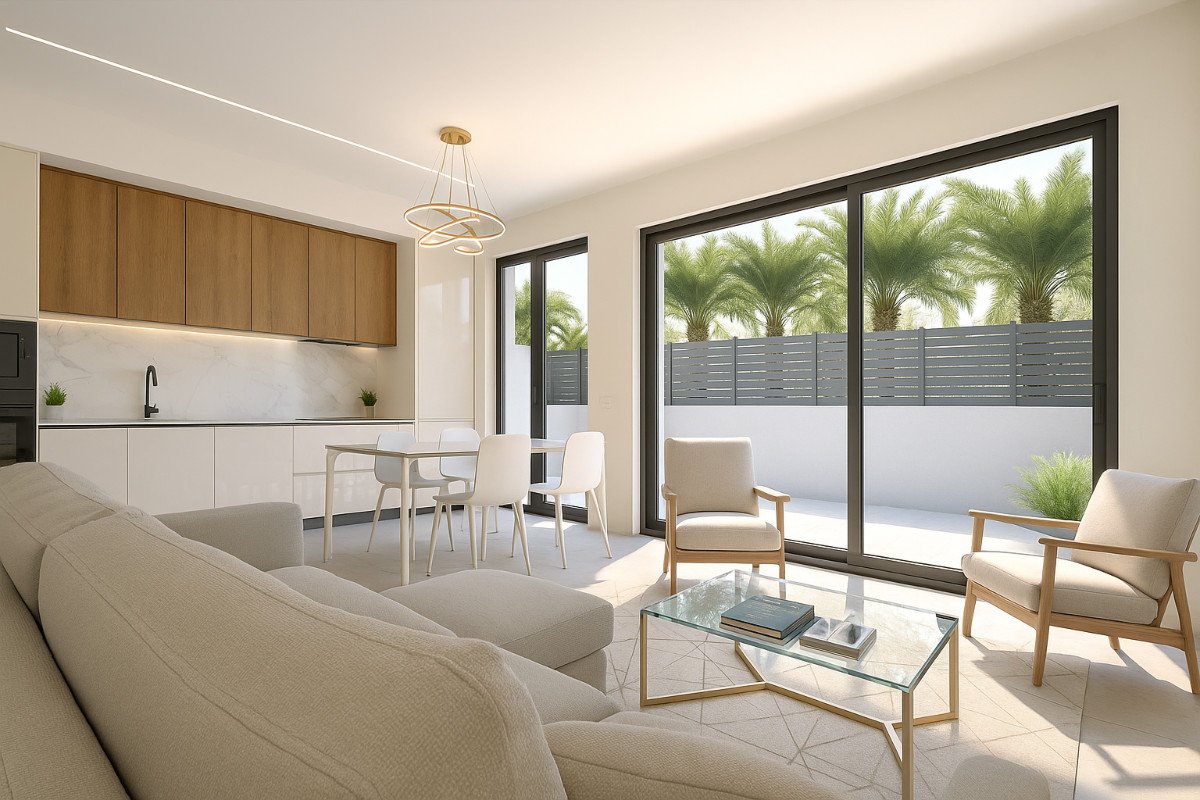
Key-Ready Townhouse in Valencia Suburbs
Modern turnkey home with private garden, terrace and high-quality finishes; featuring bright interiors, energy-efficient design and ready for immediate move-in.
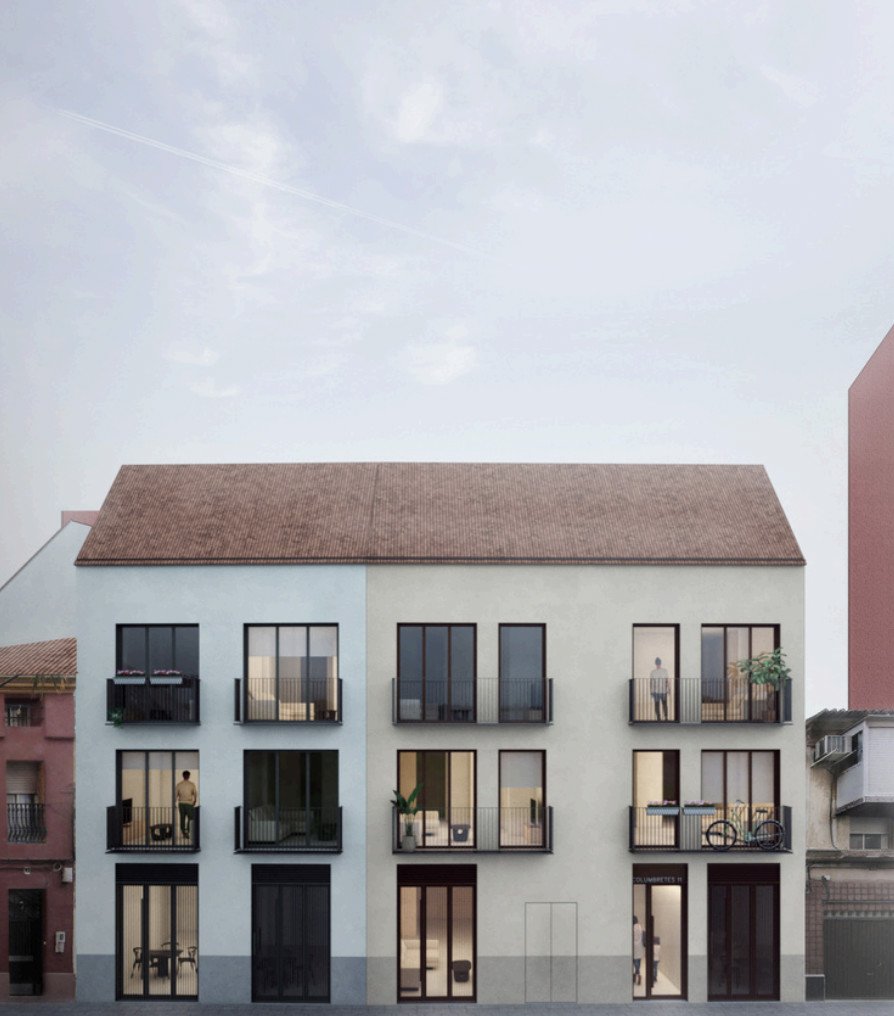
New Penthouse in Valencia
Exclusive new-build penthouses in Cabanyal, Valencia. 3 bedrooms, terraces and eco-friendly design close to the sea and city centre.