

New rules on rent increases, contracts and taxes — and a practical comparison of renting and buying a home in Valencia
Spain’s Royal Decree-Law 29/2026 has been in force since 8 October 2026. Under the new rules, property taxes cannot be passed on to tenants in new rental agreements, landlords cannot require tenants to take out rent default insurance, and temporary lets must have a genuine, documented purpose. Eligible tenants with a taxable base below €33,007.20 may also claim up to €1,163 per year in income tax relief.
A second measure, Royal Decree-Law 28/2026, could take effect on 15 November. If ratified, it would introduce further automatic extensions of five or seven years and compensation for tenants when landlords decline to renew. Both decrees still require approval by the Congress’s Permanent Deputation, with a vote expected on 12 November.
We explain what has changed, what it means for tenants and landlords, and when buying a home in Valencia can make more financial sense than renting.
What changed in Spain’s rental laws in 2026?
Rental regulations have changed several times this year. In late September, the government approved Decree-Laws 26 and 27/2026, which Congress rejected on 2 October. Nearly identical Decree-Laws 28 and 29/2026 were published in Spain’s Official State Gazette (BOE) on 7 October. With parliament dissolved ahead of the 29 November general election, the Permanent Deputation will decide whether to ratify them. A decree-law that is not ratified ceases to apply.
The rules before and after October 2026
| Issue | Before October 2026 | Decree-Law 29/2026 (in force from 8 October) | Decree-Law 28/2026 (proposed from 15 November) |
|---|---|---|---|
| Annual rent increases | IRAV reference index | Up to 2% until the end of 2027 if the parties do not agree otherwise | No further change |
| Property taxes, including IBI | Could be charged to tenants if stipulated in the agreement | Cannot be transferred to tenants under new agreements | No further change |
| Rent default insurance | Could be required by the landlord | Cannot be required from the tenant | No further change |
| Temporary lets | Less prescriptive requirements | A genuine reason is required; duration 31 days to 12 months | No further change |
| Room rentals | Generally outside residential tenancy protections | Treated as residential tenancies when the room is the tenant’s home | No further change |
| Repairs | Landlord responsible, without a specific response deadline | Response required within 15 days, with a route for tenants to arrange justified repairs | No further change |
| Contract extension | Five years for private landlords, seven for companies, followed by up to three annual extensions | Up to two additional years on an eligible tenant’s request | Further automatic extensions of five or seven years |
| Notice of non-renewal | Four months from landlord | Unchanged | Generally six months from landlord |
| Compensation for non-renewal | None under the described general rule | None introduced | At least 12 months’ reference rent, subject to exceptions |
| Tenant income tax relief | Earlier national relief generally restricted to pre-2015 contracts | 10%, up to €1,163 annually, subject to eligibility | No further change |
Which measures are in force?
| Measure | Status on 20 October 2026 | Applies from / to | Source |
|---|---|---|---|
| Default cap of 2% on annual rent increases | In force, pending ratification | 8 October 2026 – 31 December 2027 | RDL 29/2026 |
| No transfer of property taxes to tenants | In force, pending ratification | Agreements signed from 8 October | RDL 29/2026 |
| No mandatory rent default insurance for tenants | In force, pending ratification | From 8 October | RDL 29/2026 |
| Documented grounds and limits for temporary lets | In force, pending ratification | New agreements from 8 October | RDL 29/2026 |
| Landlord’s 15-day response to repair requests | In force, pending ratification | From 8 October | RDL 29/2026 |
| Tenant-requested extension of up to two years | In force, pending ratification | Eligible existing agreements ending by 31 December 2028 | RDL 29/2026 |
| Rental income tax credit of up to €1,163 | In force, pending ratification | Eligible rental payments from 8 October | RDL 29/2026 |
| Repeated five- or seven-year extensions and non-renewal compensation | Not yet in force | 15 November, if ratified | RDL 28/2026 |
| Parliamentary decision | Expected | 12 November 2026 | Parliamentary reporting |

Can a landlord increase the rent?
In brief: Until 31 December 2027, where the parties cannot agree on an annual increase, it is capped at 2%. An increase is not permitted where the rent already exceeds the applicable maximum state reference price.
Under Decree-Law 29/2026, annual adjustments to existing agreements depend first on what the parties agree. Without agreement, the increase cannot exceed 2%. Where the rent is already above the maximum indicated by the state rental reference system, no further increase is permitted. If the agreement provides for annual revision but does not specify an index, the IRAV index calculated by Spain’s National Statistics Institute (INE) applies.
Can a landlord refuse to renew a tenancy?
The existing LAU framework. A residential tenancy normally provides for at least five years when the landlord is a private individual, or seven years when the landlord is a company. If neither party serves the required notice, the contract can then renew annually for up to three further years.
Up to two further years under Decree-Law 29/2026. This applies to agreements in force on 8 October 2026 whose mandatory period or extension ends by 31 December 2028. Tenants can request an extension of up to two years, in annual periods, provided they have no rent arrears and have paid rent for the eight months before the request. A landlord may refuse in specified circumstances, including an alternative agreement, a new contract, or prior notice that the property is required for the landlord or qualifying family members. This extension does not stack with the special extension available in a designated stressed rental area.
What could change under Decree-Law 28/2026? If ratified, from 15 November qualifying contracts would renew automatically for another five years for private landlords or seven years for corporate landlords, with the cycle potentially repeating. Landlords would generally need to give six months’ notice and tenants two months’. For agreements ending between 15 November 2026 and 15 May 2027, four months’ notice by the landlord would suffice. Valid non-renewal notices sent before 7 October 2026 would remain effective without triggering the new compensation. Existing annual extensions would run their course before the proposed framework applied.
Compensation for tenants under the proposed Decree-Law 28/2026
In brief: If this decree is ratified, a landlord declining to renew may have to pay the higher of 12 months’ rent at the relevant reference rate or one month’s reference rent for each year the tenant has occupied the home. Exceptions apply.
The proposed compensation would be whichever is greater:
- Twelve monthly amounts calculated using the upper limit of the state’s rental reference price for the property.
- One such monthly amount for every year of occupation, with incomplete years calculated proportionately.
Where no reference value exists, the current rent is used. The amount becomes payable when the property is handed back. Selling the property does not necessarily avoid the obligation: it passes to the buyer.
The proposal provides exceptions where they are properly explained in writing in the non-renewal notice. These include the landlord or relatives up to the second degree genuinely needing the property as their main residence (with compensation payable if they fail to move in within three months); the tenant not living there for more than six of the previous 12 months without good reason; the tenant owning another suitable home in the same municipality; the parties signing a new contract; or the tenant refusing a compliant new agreement of at least five years, or seven for a corporate landlord.
A tenant who was entitled to a mandatory extension but did not request it would not qualify for compensation. Where an extension was requested, any compensation entitlement would be deferred until it ended.
Tenants’ rights in Spain from 8 October 2026
Property taxes and insurance. Under agreements signed from 8 October, landlords cannot transfer property taxes such as IBI to tenants unless the tenant is the liable taxpayer. Earlier agreements generally continue under their existing terms. Rubbish collection charges (tasa de basuras) may still be payable by the tenant. Landlords cannot require rent default insurance from tenants. Agency and tenancy administration fees remain the landlord’s responsibility, as they have been since 2023.
Repairs. A tenant of a main residence can request necessary work in writing, enclosing a quotation. The landlord has 15 calendar days to accept, propose an alternative or arrange the work. If there is no response or the refusal is unjustified, the tenant can arrange the work and deduct reasonable costs from rent. For temporary lets, the response period is five working days.
Temporary lets. There must be a genuine and demonstrable reason, such as work, study, medical treatment or renovation of the tenant’s usual home. Agreements can run from 31 days to 12 months. A longer term without proper justification, or more than two successive temporary agreements for the same property and tenant, may mean the arrangement is treated as a regular residential tenancy from the outset. After one month, the tenant can leave with 10 days’ notice. Temporary agreements signed before 8 October continue under their existing terms until expiry and cannot then be extended under that previous regime.
Renting rooms. When someone rents a room as their home, the agreement is treated as a residential letting. The combined rent for all rooms must not exceed what could be charged for the whole property.
Economically vulnerable tenants. Where a court finds a tenant economically vulnerable in proceedings for non-payment, the authorities have two months to offer alternative accommodation or settle the debt. If they do neither, the debt can pass to the administration and the tenancy continues.
Source: Royal Decree-Law 29/2026.

Rental taxes and deductions in Spain
Tenant tax credit: up to €1,163 per year
Eligible tenants renting their main home can claim a Spanish personal income tax (IRPF) credit equivalent to 10% of eligible rent, up to €1,163 a year. Conditions include:
- An annual taxable base below €33,007.20.
- A maximum qualifying rental amount of €11,630 where the taxable base is no more than €23,007.20, tapering above that threshold.
- Subject to exceptions, neither the tenant nor family members owning another home within 50 km of the rented property for at least half the year.
- Qualifying payments made from 8 October 2026; 2027 would be the first full eligible calendar year.
- No combining this credit with the older deduction for qualifying pre-2015 agreements.
Example. A couple pay €1,200 per month in rent, with both named on the contract and each contributing €600. One earns €1,500 monthly and the other €1,200. Each may potentially qualify for a 10% credit on €7,200 of annual rent, or €720. A credit cannot exceed the tax due, so the lower earner may not use the full amount. The household could save roughly €800–€1,000 per year, depending on its tax position. A tax adviser should check the actual entitlement.
Tax relief for landlords
Private landlords who do not meet the definition of a large property holder may benefit from reductions to taxable income from qualifying long-term residential lets. Depending on the circumstances, reductions under Decree-Law 29/2026 can range from 15% to 100%, with more generous relief for certain first-time lettings, rent restraint or letting below reference prices. Eligible expenses such as IBI, community fees, insurance, repairs and contract administration may also be deductible in the rental income calculation.
Why the number of properties owned matters
Under Decree-Law 29/2026, portfolio size matters where a tenant stops paying and a court considers the tenant economically vulnerable. Eviction can generally be suspended for up to three years, subject to annual review. However, where a private landlord owns no more than two homes, tenant vulnerability does not prevent eviction under the rule described: for example, a landlord with one home to live in and one rented out. With three properties, suspension may become possible.
Property count does not determine the annual rent increase limit. Owners of ten or more homes are generally considered large property holders, although the threshold can fall to five in stressed housing areas. Such owners are excluded from the new tax reductions described above. Legal interpretations of the portfolio threshold differ, so individual cases need professional advice.
The advantages and disadvantages of the new rules
For landlords
Potential advantages: Tax incentives for stable long-term lettings; in specified vulnerable-tenant cases, public authorities may assume unpaid rent after two months; qualifying contract administration costs may reduce taxable rental income.
Potential disadvantages: The landlord must bear IBI and the cost of any rent default cover rather than demanding it from tenants under new agreements; temporary letting requires a legitimate purpose; and, if Decree-Law 28/2026 is ratified, repeated extensions and compensation requirements could make ending a tenancy more costly, including when a property is sold.
For tenants
Potential advantages: Up to €1,163 in annual IRPF relief for eligible renters, fewer upfront costs, a 15-day response requirement for necessary repairs and potentially longer contractual security.
Potential disadvantages: Some landlords may withdraw homes from the rental market; tenant screening could become stricter; restrictions on increases in existing agreements do not necessarily limit the starting rent of new contracts outside stressed areas; and further changes remain uncertain until parliamentary ratification.
How might the changes affect the decision to buy?
When letting a home becomes more expensive or a tenancy harder to end, some owners may decide to sell instead or leave a property vacant. That could mean fewer choices and more demanding checks for renters, but potentially more resale stock for buyers. For households considering a long-term move, it is a useful moment to compare the real costs of renting with buying.
In our work in Valencia, we are already seeing how landlords’ responses to repeated legislative changes are reshaping the market. The economic logic is straightforward: every legal risk has to make financial sense.
When owners see the prospect of contracts continuing for years, a 2% limit on increases and greater difficulty recovering a property from a problematic tenant, they may price those risks into the one figure they can still control: the initial asking rent. This is why attempts to regulate the market can sometimes produce the opposite result, pushing up prices for new tenancies.
If Decree-Law 28 is ultimately ratified, two developments could happen at once. Renting may become harder, particularly for foreign residents. Some cautious landlords may leave homes empty, others may increase their initial asking rents, and screening is likely to become more demanding. Applicants without a Spanish employment contract could face an especially difficult process.
Buyers, meanwhile, might see more opportunities if owners who are unwilling to accept the risks of letting decide to sell, adding properties to the resale market.
It would be premature to treat either scenario as certain. We are awaiting the final vote and preparing clients for both possibilities, whether that means buying a home with a more predictable mortgage repayment or letting a property responsibly under the new rules.
Olga Verzhykovska, Co-Founder of Spaces & Places
Renting versus buying in Valencia: a worked example
Consider a household with a net monthly income of €2,700, currently renting for €1,200 per month. What if it bought a comparable apartment for €240,000?
How much would buying cost?
- Mortgage: 80% loan-to-value, or €192,000. At an illustrative fixed rate of 3% over 30 years, the repayment is approximately €809 per month, with around €99,400 in interest over the full term. A HelpMyCash market review suggests fixed rates of around 3% in October 2026.
- Deposit: 20%, or €48,000.
- Purchase tax and transaction costs: Approximately €24,200. For a resale property in Valencia, this includes 9% transfer tax (ITP), or €21,600, plus notary, registry, valuation and administrative costs.
- Running costs: Approximately €150 per month for IBI, community fees, insurance and minor maintenance.
The owner’s initial monthly outlay would therefore be around €960, compared with €1,200 in rent. However, buying requires approximately €72,200 in cash upfront. A fixed-rate mortgage stabilises the loan repayment, not the costs of owning the property. In the comparison below, running costs increase by an assumed 2% annually.
How much could you spend over 30 years?
Assume that rent and ownership running costs both rise by 2% per year.
| Renting | Buying with a mortgage | |
|---|---|---|
| Initial cash needed | Rental deposit | Approximately €72,200 (€48,000 deposit plus €24,200 in tax and costs) |
| Monthly payment today | €1,200 | Approximately €960 (€809 mortgage plus €150 running costs) |
| Total cash paid over 30 years | Approximately €584,000 | Approximately €436,600 |
| What remains after 30 years? | No property ownership | Mortgage-free ownership of the flat |
On these assumptions, the renter spends roughly €147,500 more over 30 years and owns no property at the end. The buying total includes the deposit, taxes, loan repayments and running costs. The 2% annual rise in rent is a modelling assumption, not a legal cap for all future lettings: a new contract may be priced differently.
When does buying break even? Allowing for buying and eventual selling costs, buying becomes more economical in many scenarios after four to eight years. In a less favourable scenario with no property price growth, no rent growth and a 5% annual return on the renter’s savings, the break-even point is approximately 11 years. Even where the renter invests the initial €72,200, buying performs better over 30 years in the scenarios examined. These are illustrative results, not forecasts; changes in inflation, taxes, investment returns or housing costs would affect the outcome.
Thinking of buying instead of renting?
Compare your current rent with the real monthly cost of owning. Browse the new-build homes currently available in Valencia and across the Costa Blanca.

When buying may be the better choice
- You expect to remain in the city for at least seven or eight years.
- Annual rent on a comparable home is more than around 5% of its purchase price. In the least favourable scenario examined, buying no longer has the advantage if comparable rent falls below roughly €1,080 per month.
- You have savings equivalent to approximately 30% of the property’s price and a stable income.
- The mortgage repayment and ongoing ownership costs are no higher than your current rent.
When renting can still make sense
- You may move within three or four years or need flexibility for work.
- You do not have enough cash for the deposit and taxes, and borrowing that money would add financial risk.
- Renting a comparable property costs considerably less than owning it.
- You are a non-resident eligible for only 60–70% mortgage finance and would need to contribute substantially more cash.
What income do you need for a mortgage in Spain?
Spanish lenders commonly look for total monthly debt repayments to remain within about 30–35% of net household income, known as the debt-to-income ratio (DTI). A mortgage for a resident buyer may finance up to 80% of the property’s value, while non-resident borrowers more commonly receive 60–70%.
At 3% over 30 years, each €100,000 borrowed costs roughly €422 per month. Using a conservative 30% affordability threshold, that implies around €1,400 in net monthly income per €100,000 of borrowing, assuming no other debts. For the €192,000 loan in our example, a household might need around €2,300–€2,700 per month, depending on the bank’s criteria. A lender makes the final decision after examining income, existing commitments and documents.
Other costs of buying a property in Valencia
- Resale property: Valencia’s standard ITP transfer tax is 9% from 1 June 2026. It is paid to the Valencian Tax Agency (Agència Tributària Valenciana, ATV). Reduced rates of 6% or 8% may be available to qualifying buyers under 35 purchasing their first main residence, subject to income conditions.
- New-build property: Normally 10% VAT (IVA) plus stamp duty (AJD) of 1.4%.
- Purchase administration: Notary and Land Registry charges, a mortgage valuation and administrative fees, often several thousand euros in total.
- Ongoing ownership: IBI, community charges, insurance and repairs, all of which can increase even if the mortgage rate is fixed.
Buying as a resident or non-resident
Both groups generally need a Spanish NIE number and a Spanish bank account. Residents may qualify for a mortgage of up to 80% loan-to-value, whereas non-residents are commonly offered 60–70%. Banks may request additional evidence where the applicant earns income abroad or in another currency. Non-resident owners may also have Spanish non-resident income tax obligations even if they do not rent out the home.
Where to get advice in Valencia
Thinking of buying instead of renting? Explore new-build homes in Valencia and on the Costa Blanca and compare the mortgage costs with your current rent.
Need an initial mortgage assessment? Our mortgage team can provide a free indicative assessment of your buying budget based on income and whether you are a resident or non-resident. Explore mortgage advice.
Already a landlord? Spaces & Places can help with tenant selection and checks, compliant contracts and the day-to-day management of your rental property.
Comparing locations? If you are still deciding where to buy, see our guide to the best areas in the Costa Blanca for buying a new-build home.
FAQ: Spain’s Rental Law in 2026

The bottom line
For tenants: The changes create additional protections and possible tax savings, including rules on property taxes, insurance and repair requests. But they may also lead some landlords to withdraw properties, raise starting rents or tighten applicant screening. Applicants without Spanish employment contracts may be particularly affected.
For landlords: Letting a property may become more demanding, particularly if the further extension rules are ratified. There are also potential tax advantages for qualifying long-term lets, and professional management can help owners navigate the requirements.
Renting or buying: If you plan to stay in Valencia for at least seven or eight years and have the savings for a deposit and transaction costs, buying can compare favourably with renting over the longer term. Renting still makes sense for anyone who values flexibility or is not financially ready to buy.
Spain’s rental rules are changing rapidly, and nobody can know precisely what the market will look like next year. A fixed-rate mortgage offers predictable loan repayments and the stability of owning your home, although ownership costs remain and can rise. If you would like to understand what you could afford, our mortgage team can provide a free initial assessment.
Primary legal references: Royal Decree-Law 29/2026 and Royal Decree-Law 28/2026. Legislation reviewed on 18 October 2026.
Weighing up your options under the new rental rules?
See what’s available right now: new-build homes in Valencia and along the coast. Or message us on WhatsApp and we’ll help you compare buying with your current rent.
About the author

SPACES & PLACES Exclusive Property S.L.
Information in this article is intended for general guidance only. Development details, pricing and availability may change; please verify all information directly with the developer or your trusted adviser before making any purchase decisions.
Prices and availability change as individual units are reserved.
Featured new-build developments near Valencia

New Project in Denia, Spain
Seaside living near Dénia: elegant new-build homes with spacious terraces, landscaped gardens and pools and energy efficiency.

Key-Ready Townhouse in Valencia Suburbs
Modern turnkey home with private garden, terrace and high-quality finishes; ready for immediate move-in.
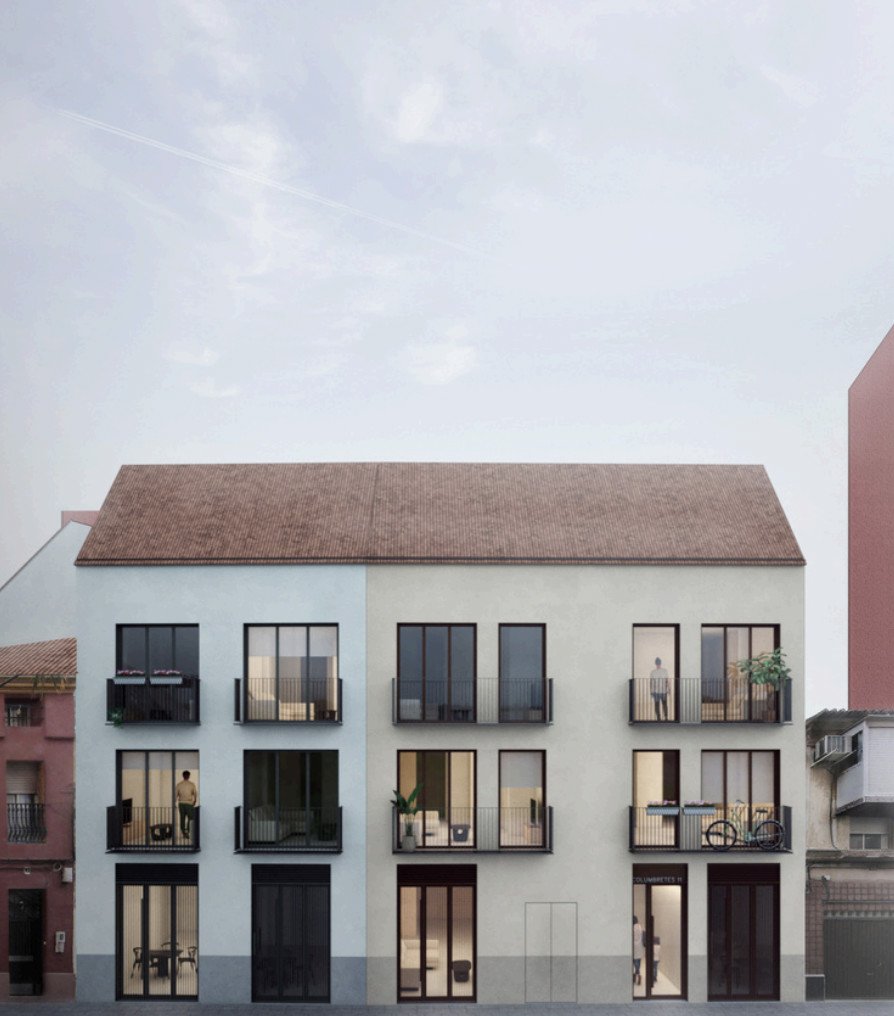
New Penthouse in Valencia
Exclusive new-build penthouses in Cabanyal, Valencia. 3 bedrooms, terraces close to the sea and city centre.